Claeys Road Diaries
“Of all the paths you take in life, make sure a few of them are dirt" ~John Muir
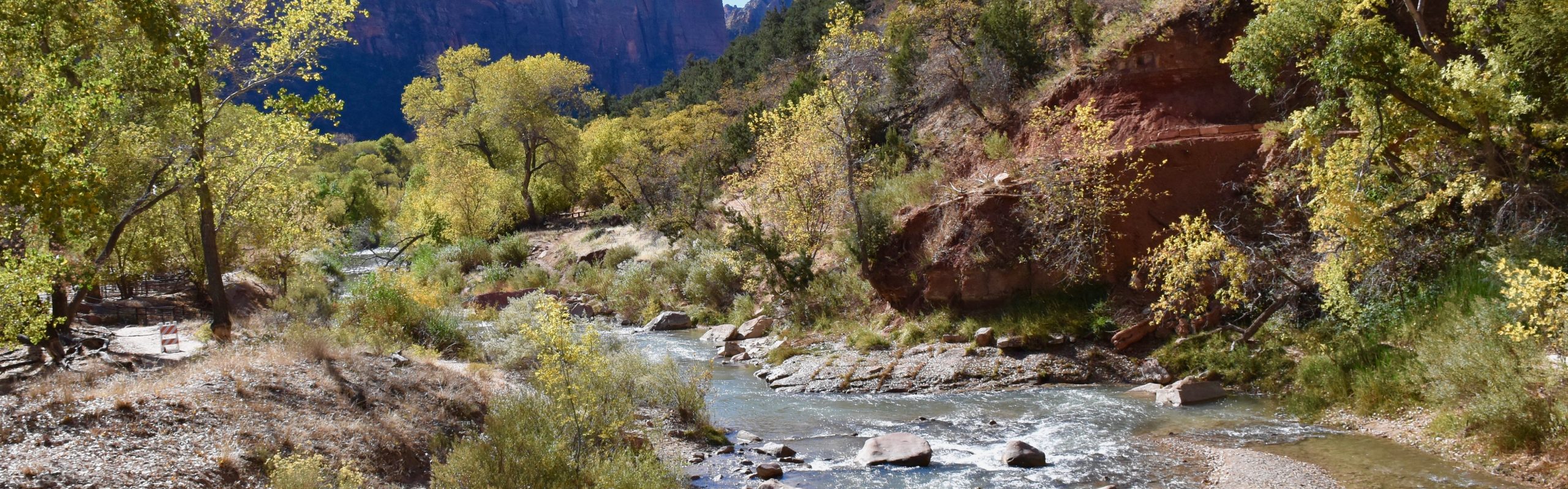


We left Durango and our friends, Marilyn and Ken, around noon on Thursday and headed out on our 3 hour drive east to Great Sand Dune National Park. As with many of the parks, we had heard a lot of great things about it. We crossed over Wolf Creek Pass on the way which is quite high and since they were forecasting 14 inches of snow in the pass that night, we were glad to get through it and to the other side early in the afternoon. As we came down out of the mountains we started across what seemed like a high desert until we reached the turn off for the park. Unfortunately, the campgrounds in the park were closed for the winter, even though we weren’t aware of that in advance. Major Bummer. The problem is funding. They would like to keep them open but they can’t afford staff to manage the campgrounds in the slow season. It’s slow but there are plenty of people who still are looking for campsites when visiting the park. We went to the visitor center and the ranger directed us to a campground 8 miles outside the park. As long as we didn’t mind driving up a 3 mile dirt road after the 8 mile turn off. Beggars can’t be choosers so we decided that’s where we would go. First though we stayed to watch the park movie. All parks show about a 20 minute movie that introduces visitors to all the park has to offer but the movies especially go into how the parks were formed (geology), the ecology of the parks, and all the things the park has to offer. They are really helpful and Laurie and I always eagerly consume all the ecology and wildlife info. What is really unique about Great Sand Dunes is the number of ecosystems that are included in the park. It goes way beyond just the sand. The sand dunes are actually sandwiched between a wetland area below it in the valley and a mountain alpine system above it. The Sangre de Cristo mountains are quite high and include alpine tundra, sub alpine, and Montane Forest. This area included Pikas, Perigrine Falcons, Black Bears, Rocky Mountain Big Horn Sheep, and Bobcats. The sand dunes and grasslands contain a number of flowers, Kangaroo Rats, Elk, Cranes, and the Great Sand Dune tiger beetle which is only found here. The wetlands are frequented by a variety of birds including American White Pelicans. The dunes are formed by erosion in the mountains and the sand is carried down by streams and the wind to form the highest sand dunes in North America. Winds from the valley below, blow the sand up to form the dunes and downward winds and streams bring it back down from the mountains to regenerate the dunes. They just keep recycling the sand. Much of this information came from the movie. After the movie we left the park and headed for the campground. We noticed that it was getting a little windy at the visitors center and by the time we got to the turnoff for the campground it had picked up even more. Now the Ranger said it was a dirt road but he really didn’t go into the details. Like, it’s three miles up the side of a mountain. Yes it’s dirt, but its strewn with huge ruts and rocks and boulders. We averaged between 5 and 10 mph with the RV rocking violently from side to side. There was a huge crash and one of our tupperware containers stored above the cab came crashing down. Luckily Jackson wasn’t under it. It probably took us about 25 minutes to make it up to the campground and we shared it with only one other camper. I suppose the road was a detriment to more than a few people. The wind was howling by now and the temperature dropping but it was a beautiful sunset so as I was making dinner, Laurie was able to capture some great photos by standing on the picnic bench to shoot over the scrub pines that were in the way. It didn’t get as cold as it had been over in Utah but the wind was another story. It was howling and gusting and rocking the RV all night long. The stars were absolutely amazing out here where there’s little light pollution but I’m surprised the wind didn’t blow them out of the sky. As the morning light made it’s presence known, the wind kept up its relentless gusting. We did a short hike on the mountain to see Zapata Falls which was kind of cool as you had to walk up through the creek and then into a cave with an open top through which the falls fell. Jackson accompanied me and Laurie into the falls. With the wind howling, it was quite cold and the sky was cloudy and threatening rain. This has been the one and only national park that allows dogs pretty much anywhere as long as they are on a leash. The hike to the falls and through the creek made Jacksons day. From there, we climbed back into the RV and headed down into the park with the goal of climbing to the top of the highest sand dune in the park. Again, we took Jackson and disregarded park rules and let him run free in the sand. It was off season and not many visitors around so it didn’t seem to make much difference. We first had to cross Medano Creek which is unique in that the water flows in waves. This is due to the sand which slows it down and is then washed aside, releasing a new wave of water. The wind was howling, and it was cold, and the sand was blowing. To say the least, it wasn’t a pleasant endeavor for us with the exception of Jackson who was running and enjoying every minute of it. We made it about a half mile and decided that it just wasn’t worth it. We don’t usually turn in the towel when the going gets tough but this just wasn’t enjoyable. The sand dunes were amazing but the wind and the cold really put a damper on the visit. I suppose timing is everything and we could easily have spent several days here hiking on the mountain and in the dunes if the wind was calmer and there was some sunshine but it just wasn’t going to be. It was disappointing to say the least. Maybe we’ll make it out here again when the weather is nicer. This visit was a casualty of the season.


CAPITAL REEF
Sitting at the booth table in our RV a few weeks back, I was laying out the plans for the Utah portion of our journey. I had the large atlas out and was starting to plan the sequence of parks and the roads to get there and so forth. OK. So we leave Grand Canyon in northern Arizona and then enter southern Utah and hit Zion. Check. Then we start heading a little to the northeast and stop at Bryce Canyon. Check. We continue in a northeast direction and next comes……Capital Reef National Park? The first thought that hits me is where the heck did this name come from? A reef is in the ocean and this is most definitely a desert. Well, this desert used to be under an ocean so maybe there’s a reef still there. What’s the deal with the Capital? When you actually get to Capital Reef National Park, it starts to make some sense.
As with the previous two parks, Zion and Bryce, Capital Reef has it’s own unique geological forces at work that give it a distinctive geology different from the others in Utah.
So, first the Capital. It doesn’t take long after entering the park to notice the large, white, dome shaped mountain among the other hills and ridges. This to the early settlers reminded them of the US Capital, so that is the name they gave it. Since it is such a distinctive part of the geology here, it made its way into the parks name. Now a reef is a coral or rocky structure in the ocean that blocks ships from getting near a bay or coastline. It also doesn’t take long to notice a range of white, rounded, steep, cliffs that run for over 100 miles. This is the reef and so named because it formed a barrier to the settlers trying to get to the other side of them. The question to me then became how is it that this “reef” formed here but not in the other parks. I decided to attend the ranger talk the morning after our arrival where the geology of the park would be discussed. I’ll try to recount it here to the best of my limited earth science abilities. As with most of this state, there are multiple layers of sediment that has been deposited over millions of years as it has been covered with oceans, deserts, swamps, and forests, a result of climate change. The bottom most layer is white, Kaibab Limestone and that in turn is covered with a variety of colored sandstone and other deposits. Underneath all of this, there were two of the earths tectonic plates grating over each other that pushed the land up and formed the Colorado Plateau, but, in this park and in this location, there was a fault underground and these plates caused the earth by this fault to push up even higher, to 7,000 feet and then fold over. This is referred to as the “Water Pocket Fold”. Now the sandstone formed the top layers of the fold and erosion eventually wore these layers away, leaving the much tougher Kaibab Limestone layer on top, which is what you see today. It is quiet impressive. Like the other arid parks in Utah, Capital Reef only gets roughly 8” of rain a year but when it comes, it causes tremendous erosion and flash flooding. You can easily see how these upper layers were carried away, leaving only the limestone. You can see the white Water Pocket Fold in some of the pictures above.
The area here was first settled by the Mormons and their orchards, fields, cabins, homes, and barns are still here and still in use. The valley that runs through this amazing area is snaked through by the Fremont River, which provided them with an abundance of water for farming and raising animals. It really is like a garden of eden in the valley. No doubt it was to the Mormon as well. Our hikes took us up to the high ridges above the valley and gave us the ability to gaze upon them down below. Quite a sight.
The hikes also took us through the lows of the canyons and the ridges of the high desert, and as with the other parks in the Utah desert, the nature here is a powerful drug, and one that is difficult to get out of your system. I am quite surprised by the impact these desert ecosystems and geology have had on me. It’s hands have turned my head and made me see the amazing beauty, and color, and lines, that is all around me here. It has told me to breath, and to stop, and to look and to listen. And I have.


Bryce Canyon is only about an hour and a half away from Zion, so you might think that they would be very similar but they aren’t. They both have canyons but the geology, and therefore what you come to see, is very different. It’s actually quite amazing that such profoundly different geological forces were at work in areas that were so close, but in fact, that is the way it is with all 5 of the national parks in Utah. They are all amazing but they are all different. Bryce is home to the Hoodoo’s, which is what the red sandstone columns in the pictures above are called. I’m not going to go into all of the details here of how they are formed. In fact, if I have decided upon anything on this trip, it is to learn more about earth science because many of our national parks out west are amazing examples of geological forces at work and I just plain don’t know enough about them. In any case, in order to understand how the Hoodoo’s are formed you have to go quite a ways back in time. This area was covered with oceans and sand and swamps, etc. over and over again over millions of years and that is what left the differing layers of sediment you see in the cliffs. Most of it is sandstone but the top layer is something called Dolomite. It gets cold here in the winter and water that seeps into the cracks in the sandstone freezes and starts splitting the sandstone (red because of iron in it) apart into columns. Now sandstone erodes quite easily but Dolomite does not and since the Dolomite (white sediment) is on top of the column (being the last layer deposited) it in effect protects the sandstone directly beneath it from being eroded by rains. Thus you get these amazing columns in the canyon. We did several hikes down through the canyons and up through it’s high points and through tunnels and through tight passage ways and every corner we turned gave us another amazing view of the Hoodoo’s. There is also a type of tree here called the Limber Pine (picture above) whose claim to fame is that is can inhabit locations and harsh environments where other tree’s are unable to thrive. It’s easy to see them because they are really the only tree’s that are living right on the edge of the canyon, usually with the soil eroded from out under their roots so the roots look like spider legs. We had great weather while in Bryce. It was in the 20’s at night but in the 70’s during the day. The weather in the canyons though seemed to change from moment to moment while we were hiking. The air would be still and the sun hot and you’d be sweating and the next moment you’d be in the shade and a frigid gusting wind would be cutting straight into you. There was a lot of zipping, unzipping, adding and removing layers of clothes on the hikes. We got one other treat on our stay in Bryce and that was a full moon which for some reason was referred to as the “Beaver Moon”. I don’t know why but it was amazing. I wish I could have gotten more photo’s of it but I was perched on the edge of the canyon for over two hours waiting for it to rise above a low cloud bank and the wind was picking up and the temperature was dropping and it was dark and we hadn’t eaten yet, so it was back to the RV and back to our campsite! As with Zion, Bryce was an amazing display of the wonders of nature and taking the time to hike down into the canyon put you right in “mothers” lap. From an ecology standpoint, many of these southwest parks, especially those in Utah, share similar flora and fauna and that’s because the climate and soils are similar. You get the mountain lions, coyotes, cacti, bushes, rodents, lizards, etc. with some variations where more water may collect but there isn’t a lot of differences. Bryce is reason number two why Utah is a must destination for anyone looking to thrill to the natural wonders of our national parks out west, with the unique and amazing flare of the southwest. (Reason #1 was Zion)
When I met Dave, he seemed to have only one speed. Snail. He sauntered as if he had not a care in the world. Still today, in stores, around the neighborhood, he is always dragging behind. But get him on a trail and it’s a whole different story. He’s like lightning. I am the one following him now, usually about 2-3 car lengths behind. Not by design but for preservation. Slow and steady am I as Dave leads the way. I am eating his dust. I don’t know where he’s found such pep but he has and it doesn’t seem to be going away any time soon.
I have voluntarily relinquished any real role in planning our hikes; Dave plans most of them (hence, Desolation Peak – that was all him!). He reads about each of the trails and talks to the Park Rangers and usually offers up some options. I go along willingly with his suggestions but it does not stop me from whining. Mostly just to be a brat; leftovers from my prepubescent days. Mostly. But then, he is getting a little crazy lately. When we arrived in Canyonlands National Park, we had hiked 8 of the last 9 days. I was pooped! As usual, he read over the park paper and told me that there were no short hikes in the park; he said most of them were 10 miles or more round-trip. I responded with a “How can that be?”. I mean, that would significantly cut down the number of folks visiting this park, right. He reaffirmed it was true and off we went on the Murphy Loop trail: 10.8 miles with a 1,400-foot elevation change. We hiked down (and back up, of course) a rock face (called a ‘wash’), through the desert, to a bluff that overlooked the Colorado River. We walked for 5 hours. It just so happened that I was fueled with some angry thoughts that kept me moving rather quickly on this trail but that is not a typical day for me. Anyway, when we returned to the RV, I looked at the paper and noticed there were plenty of other hikes in the ‘easy’ or ‘moderate’ section that were less than 10 miles. When I brought this to his attention, he said we were beyond those now. “Five miles is for beginners – that’s like taking a walk for us”, he replies. Huh, someone forgot to tell my legs that! He won’t even look at the moderate hikes any longer; he goes straight to the ‘strenuous’ section to choose our hikes. He has high expectations for us.
And so, the second day in Canyonlands was no exception. He chose the Confluence Overlook trail – ten miles that involved some delicate foot balancing and several butt slides on rock slopes. I told him we need to mix in some moderate hikes; that we cannot keep up this pace. He reminded me of the couple we ran into in Grand Tetons National Park back in July. They were also on a year journey that began in January so when we met them they were six months in. We met them on the trail and hiked together to stave off the grizzlies. We eventually reached an intersection where we were turning for the 6-mile trek and they were turning for the 14-mile trek. They smiled as we parted and said it was the same for them when they started – it took them time to work up to 14 miles. Dave says: “That’s where we’re at now, Laur, 10-12 miles is nothing for us now”. Is he out of his *bleeping* mind? I could literally hear my knees screeching and my feet were aching. My legs were so tired I started missing my step. I couldn’t wait to be done. I was cursing him! That’s when I officially crowned him “The Trail Sergeant”. But, unlike Sergeants in the military, this one doesn’t get in your face and call you a wimp. He uses flattery (“You’re like a hiking God”; “Your calves are getting bigger”) and reminders of prior hikes (“You climbed down the Grand Canyon with a 25-pound pack on your back”; “You blazed through the 11-mile hike yesterday”) and he constantly cheers me on (“You’re doing great, Hon”; “Nice job”). He offers me a hand to get up a steep incline. He watches to make sure I don’t slide down a steep slope. He saves his water so there is more for me. He waits for me when I fall behind. He keeps me moving even when I’m ready to give up. And, he reminds me that in spite of all my bitching, this is exactly where I want to be. He’s right.
Truth be told, I really don’t mind. I mean, 5 miles would be nice once in a while so my hip and feet, and, oh, my knees can recuperate. But I do like the challenge and I want to be out in the park, not just standing on the edge. When we do these hikes, especially the longer ones, we are often either the only two on the trail or among very few others. It’s sometimes like we have the whole park to ourselves (or, at least, that part or section of it). It’s a treat to be away from the crowds (the tourists, we call them). We get to enjoy the solitude and peacefulness that hiking in nature brings. We hear the birds, smell the flowers, feel the wind. We are seeing things we otherwise wouldn’t see if we weren’t hiking 10 miles. And that’s the point. So, I’ll continue to follow The Trail Sergeant where he leads me. And, I’ll probably keep complaining along the way.


NAVAJO TIME MACHINES
We are visiting Arches National Park in southern Utah. Today we are hiking, again. We’ve gone a couple of miles and at this moment, we are standing alone, in front of “Navajo Arch”. It is a geological wonder. A huge archway hollowed out in a giant wall of red sandstone. After taking our obligatory pictures, I put my hand on Lauries arm and gently say, stop. Listen. Silence. I don’t mean quiet. I mean complete silence. There isn’t even the sound or touch of a breeze. You can’t even hear yourself breath. It is completely still. Then you notice it. The sound of a propeller driven plane, far in the distance, is moving across the sky towards the horizon. Because it is distant, the sound of the engine is just a lazy hum that slowly disappears as it moves farther and farther away, until it fades and then it is gone. I am taken back to my childhood at this moment. When very young, I would get up early on summer mornings and go outside before my family woke. I suppose there were very few people stirring in my neighborhood for if there were, they were very quiet. I would stand in my backyard, the sun warm on my face and I would notice the sound of a plane in the distance. I would look up to see if I could find it but usually I couldn’t. The world was so quiet with the exception of that hum as the plane made it’s way across the sky towards the horizon and then it slowly faded away. At this moment in Utah I am far away from New Jersey, but I could be a child again there, and I am.
EARTHTONES AND OPEN SKIES
Traveling up Rt. 12 through southern Utah. The car is cruising at about 75 but the earth tone scenery scrolls slowly. For hours we see barely a car; a house or town; hundreds of miles of nothing……….except a rich blue sky that makes you realize how big the earth is, and beauty for as far as your eyes can see.
SCHOOLS IN AND THE PARKS CHANGE
Schools in. When you’re on a year journey to try and visit all the national parks, that statement is music to my ears. It means gone are the crowds, the traffic, the full parking lots, the crowded trails, and full campgrounds. Since we are traveling with the flexibility that comes with not making reservations, it means that we can now pull into national parks and get a campsite. We can even get our choice of campsite. It means we don’t have to deal with loud groups disturbing the quiet on the trails. It means in general that we can enjoy more of nature and less of crowds.
We notice that the demographics of the park visitors has also changed. Gone are the families of 5 and 6. Yeah for school! What’s left now are retiree’s and foreign visitors with some weekenders thrown in. There is an entire subculture of American retiree’s that RV full time. Some are avid hikers and outdoors people and some are campground mushrooms who basically just hang out in the campgrounds. Some take advantage of everything the park has to offer. Others, have televisions on the outside of their “rig” with a satellite dish on top and a pop out bar on side as well. No kidding. They bring patio furniture and have outdoor lights strung. It’s really quite amazing. A true home away from home.
And then we have the foreign visitors. On a recent hike through Zion I would estimate that the number of foreign visitors on the trail outnumbered “English speaking” (I’m assuming Americans) by about 80% to 20%. I’m basing this strictly on the languages we heard being spoken. How great is this. We might have the best national park system in the world. I know it was the first. I love to see these foreigners experiencing some of the best America has to offer. Our national parks are flagships of the beauty of nature and we have a bunch of them. I think we’re up to 59 now. Probably about 50 of them are in the lower 48 with the rest scattered in Alaska and Hawaii. These visitors bring tons of photos and descriptions of their visits back to their countries. America is great! America is beautiful! It puts America in a very favorable light, especially at a time when that light might be a little dimmed in other parts of the world. They also bring in a lot of revenue during this slower time of the year and lord knows the parks need it, with them getting short changed in the budget and all. I’ve never had the good fortune to be able to spend time in the national parks during the fall and winter months before and it is really a great time to be here. We’re watching leaves turn color and fall along rivers in the desert. We’re sitting around a campfire not because we can burn wood even when it’s 110 degrees outside, but because we’re trying to stay warm. We’re stopping to have relaxed conversations with other hikers cause we haven’t seen anyone else for the past couple of hours on the trail. It’s a different world in the parks at this time of the year. I’m kinda glad that more people don’t realize this because it makes the experience so much better, but, that would be selfish. Take my word for it. It’s a good time to go. Do it, before schools out.
When I opened my eyes the other morning and looked out of our tiny ‘kitchen’ window, the mountain of rock was a bright orange/red from the glow of the morning sun. It reminded me of Owassa. Home. In the Fall, the Appalachian Mountains on the west shore of the lake are illuminated by the morning sun which is such a treat every time. I am always awe struck at the brilliance of the colors that I sit, frozen, watching the magnificent scene. The first time I saw them I thought the hills were on fire! I ran downstairs to get my phone to take a photo but by the time I returned the colors had faded. That is how it is at the lake, in the mountains, the morning unfolds at its own pace; it doesn’t wait for us. Even when I am lucky enough to get a photo, it never does the scene justice. I just cannot seem to capture the fiery orange/red glow and the beauty it bestows.
So, there I was transported in my mind back home. Lake Owassa. A place that holds such charm and allure for us; our place to escape and destress. At least that is what is was before we left for this trip. I cannot help but wonder whether it will be the same when we return. What will it be like to live there? Full time. Will it still hold the same wonder and awe? Will it still be that sanctuary; our nature retreat? Will it still feel like a warm embrace? It looks different, that is for sure, because we’ve moved a lot of stuff from Homer Street but we didn’t register that before we left because we never finished unpacking; we never settled in.
I cannot help thinking about what it will be like when we return. I’ll admit, there is a tiny part of me that misses home. I think it is the part of me that craves a place that is familiar; a place that was created by us; that is us. I also miss my bed. (I am so over this air mattress thing!!) There is a lot of time to think when you are traveling. Driving in the car, hiking on the trails and sitting around the campfire at night. And often I imagine how it will be to be back home. After living on the road, never being in the same place for more than a couple of days, will we be antsy? Will we want to get back in the RV and hit the road? Or will we sigh, relax and settle in? The lake house is a miniature version of Homer Street but after living in a 200 square foot trailer for 12 months, will it seem spacious? Or will it still not be big enough? Where will be work? Will we have to endure a long commute like the old days? How long will it take to find work? What if we cannot find work? How will we pay the bills? Will our money run out? Will we stay at Owassa? Will we move? What comes next after this journey? How will life be different? Will Dave and I be different; changed? There are so many unknowns and lots to be anxious about. But I am certainly NOT ready to go home yet. There is still so much to see and do and I am not wishing this year to be over or to go any quicker.
I know one thing is for sure: whatever comes next, I have absolutely zero regrets about our decision to quit our jobs, sell our house and take this journey together. I am 100% certain it was the right thing; the absolute best thing for us. If I die tomorrow or a year from now or 20 years from now I will never regret it. This is the single, and I mean single adventurous thing I have done in my life. I’m thinking this may be my mid-life crisis. Not a sports car or an affair, but still something wild and crazy to shake things up. I needed something big, HUGE, to catapult me into the second half of my life. I needed time to think. Time to ponder. Time to re-evaluate. Time to get to know me. And time to figure out how to forgive and let go. I want to let down my walls, abandon fear and live my true happiness. I want to do, not just be. I want my work to mean something; I want my life to be about something. I want to make a positive impact – to leave a mark. So that when I die it will be with a full heart, no regrets. And so those that knew me will have known the truest me and will smile and remember me fondly.


It becomes increasingly difficult to write about the essence of our experience in each National Park right now because one; it takes a lot of time to write them and most days we are out all day hiking, and two; we are hitting a stretch of parks that are very close together, which leaves little time in between parks to write things down. These two points collide and the next thing you know it’s whose on first and what’s on second. What you experienced in a park starts blending in with what your doing in the next park. It started with the Grand Canyon in northern Arizona and is now closely followed by 5 parks in Utah that are very close together. The parks in Utah are like pearls in a string but they are also very unique from each other. Unless we write immediately about the current park, you really start finding yourself falling behind and confusing them. Case in point: I’m writing about Zion today but we have already gone on to Bryce and are now in Capital Reef National Park. OK, so here’s a delayed recounting of Zion.
I want to start with two short stories here. One is that my niece, Meghan, asked me a few months ago about my favorite park and I answered “Glacier”. Our hikes into the alpine zone with all the alpine flowers in bloom was incredible. Story two: a guy in high school is enamored with the first girl he has dated. It starts getting hot and heavy and when I suggest playing the field for some perspective, his answer is that why should he when he has already found one he likes. I ask him if the first ice cream he tasted was vanilla would he ignore Baskin and Robbins for the rest of his life, since all the other flavors he hasn’t tried might “trump” vanilla? Wouldn’t he want to try them all before he entertains some ranking system? His answer is irrelevant but the two stories together are. I should never elevate a park to #1 when there are still about 45 to go. Yes, Glacier was magnificent, but, Zion is incredible. It may be the new number one. Not sure but it’s at least up there. The name Zion means “promised land” and it really does hold true to its name. From the very moment you drive into the park, your head is spinning from one direction to another as the views of the mountains and canyons and cliffs and different geological formations are all different and mixed together and are truly breathtaking. The eleven mile drive into the park has you has you spellbound looking at all of this geological creativity, and that’s before you actually get to the “attractions” further in the park. I can’t describe it all in detail without writing a book so take a look at some of the pictures and then plan a trip here because it is truly breathtaking. Once into the park, there is a valley that runs north to south on the east side of the park. Along each side of this valley are the second round of amazing peaks and cliffs and rock formations, each with their own unique features. The valley is relatively arid with the exception of the Virgin River which runs down its middle and which eventually connects with the Colorado River on its journey to the Pacific. The Virgin River is a flash of green snaking up through the valley and is lined with Box Elder and Cottonwood trees as well as shrubs and grasses. This provides a rich environment for birds, mule deer, squirrels, chipmunks, etc. Many of the cliffs are made of sandstone which is incredibly porous. Zion itself gets very little precipitation, but the rains and snow melt from far away on the elevated Colorado Plateau, seeps down through the sandstone until it reaches a layer of non-porous rock. It then is forced to travel laterally along this non-porous rock through many miles until it reaches the sandstone canyon walls in Zion. Once there it either seeps or pours out of the walls. It takes approximately 12,000 years for the water on the plateau to complete its journey to the canyon walls of Zion! The wet canyon walls and shade then become an environment for a variety of ferns and other plants that grow from the canyon walls forming hanging gardens. This water making its way to the canyon walls was really evident on one of the hikes we took. The hike was called the Narrows, because you hiked up the Virgin River as it makes its way through miles of narrow canyons. The river was our path and the steep canyon walls were decorated with plants taking advantage of the seeping water. This was really a unique hike. The width of the Virgin River up through the canyon varied at different points but all along the route we were boxed in by towering, red canyon walls, the sun and the sky far above. The depth of the river varied from 6 inches up to our upper thighs. At some points the rapids were very strong and it was a challenge to stay upright. The only thing that was maybe more amazing than the canyon and rivers beauty was the fact that I completed the hike without getting knocked over and taking a dip in the 50 degree water! The further up we hiked, the more narrow the passage became and also the deeper the water was. Although the river continues for quite a ways, we turned around and headed back after hiking in about 3 miles. Further up the river the water would have been over our heads in spots and we weren’t necessarily interested in getting soaked. Along the way we could see the end result of the 12,000 year journey of the water in both the hanging gardens and water running down the canyon walls. The water runs into the river which in turn provides the erosive power to continue cutting through the sandstone to deepen the canyon. The Virgin River in turn carries millions of tons of sediment down to the Colorado River every year. Flash floods are a real concern and the river can increase to a wall of water with short notice, even if it is sunny where you are. Storms that are miles away can send flood waters unannounced and its power will carry boulders and trees down as if they are insignificant. The plateau not only gets a significant amount of precipitation vs Zion, it also has much colder temperatures during the winter months. We camped above the canyon rim our first two nights and the nighttime temperatures were in the mid twenties. Later we moved to campsites down in Zion Canyon and the temperatures at night topped out in the mid forties. Big difference. Another hike we did was the “Angels Landing” trail which was only 2.7 miles in (5.4 roundtrip) but the final half mile was what gives the trail its name. It’s a place where only angels go. The trail runs up a very steep incline with thousand foot drops on either side of you. Definitely not the hike for anyone with a fear of heights. That final half mile has chains bolted into the rock for hikers to hold on to as getting a good footing is tentative at best. A number of lives have been lost on this hike although I didn’t think it was too dangerous as long as you got a good grip on the chain. The views of the canyon, valley, and surrounding peaks from the top was crazy. Quite a hike. We did a few other hikes in the canyon and then left the park to drive over to its western side. There we re-entered the park and hiked the Taylor Creek trail up through Kolob Canyon. This was a canyon hike and quite different from the up and downs we did on the east side. The weather varied from minute to minute, either being hot and the air still with you sweating or, the wind was howling, the temperature dropped and you were freezing. This pattern of canyon weather was something that we first encountered in our hike down into the Grand Canyon and we would continue to find it in Zion, Bryce and Capital Reef and I suspect any of the subsequent “canyon” parks we go to. Taylor Creek Trail was a 5 mile hike that took us up along the Creek and into the Kolob Canyons. It was a relatively easy hike but the views were again amazing. The reddish orange cliffs that channeled us up through the canyon seemed to glow like the embers of a fire. It was as if the cliffs had lights in them. There are a number of animals that make the park home although we didn’t see many of them. The beautiful Stellar Jays is a western bluebird that makes a habit of hanging around campsites for handouts. There are elk and Peregrine Falcons that hang out on the rim; Mountain Lions, Desert Tortoises, and Tarantula’s that live in the canyons; and amphibians and humming birds along the Virgin River. There are also a variety of plants that basically are adapted to varying availabilities of water.
It seems futile to search out the superlatives needed to describe the beauty of these parks and the wonder they inspire. I find myself repeating adjectives and not being able to capture in words the beauty these parks contain. And saying which one is the best is like going to an art museum and being mesmerized by incredible paintings of different subjects by different artists, all wonderful and unique, and saying which is the best. As we go from park to park, the wildlife, the flowers, the geological formations, and the weather are all unique. In addition to the visual affect it has on you, you also get to experience the smells and the sounds and even the feel of them. How can you say that one is the best? How can you compare a Rembrandt to a Monet? How can you compare a Glacier to a Zion. You really can’t and maybe you shouldn’t even try. However, Zion National Park by its name, promises the promised land…….. and Zion delivers. It is a MUST SEE. While you’re at it, extend your vacation and hit the other parks in Utah as well. It is a trip through the southwest that you won’t forget.
Left the beautiful Grand Canyon. I’m not sure if its beauty, its breadth, or its magnitude has been fully realized by me yet, but I do know it has left me in awe. Everything they say about it is true, including that words cannot describe it. You have to see it.
Drove about 5 hours up through northern Arizona through low desert, bare with scrub brush and colored hills. The hills, all lined and exposed with various colored layers of sediment standing as a testament to the erosive qualities of the wind and the rain. Long stretches of straight highway where you could see for miles and your thoughts drifted up into the blue sky. Passed through an American Indian reservation or two but there wasn’t much to see from the road other than some hastily created stalls selling Indian pottery and such. Much of the homes near the road were quite run down. We didn’t get into the reservations but I’d really like to know more about how they are set up and operate. We gradually gained altitude up through the high desert until around seven thousand feet we were in pine forests again. What a change. Not for long though, as the road followed the high ridge and then we descended down the opposite side of the hills and headed into southern Utah. We stopped for diesel, food, and propane in the first town we came to and then headed up again into the high desert with our sights on Zion National Park. We were not surprised on our arrival to find that the campgrounds in the park were full. It was a Friday. Even in the beginning of November these gems of our National Park system are busy. So we located a campground around a half mile from the entrance and set up our stay. It was in the high seventies during the day but as the sun slowly slid down towards the first edge of the western mountains around us, the air cooled and we started to get wood ready for a fire. I walked out into the brush to collect some flat rocks to build up a rock wall around our fire pit. It’s dry here and the fire ring is surrounded by lots of dry grass and trees. No need to set the desert on fire trying to warm ourselves up. The fire pit wall grew to over a foot high around. That’ll do. It gets dark early now. By six o’clock, the first stars were starting to appear and our fire was starting to serve its purpose. Laurie had the dinner going and we sat down around the fire to eat. The fire was doing a decent job of holding off the cold and the breeze which was starting to be the focus of the evening. Darkness fell quickly, the sun making a hasty retreat behind the western range and leaving a soft blue glow as its departing gift to us. We finished our dinner and tossed our paper plates into the fire, standing close together to supplement our warmth. It was quiet with the exception of the crackling of the fire and the sound of the wind. The smoke from the fire drifted upwards and we watched it as far as the light from the fire could take it and then it disappeared into the darkness and led our eyes to the stars above, which had gotten brighter while we were eating. Like diamonds on a black velvet background, they hung over the dark silhouettes of the surrounding hills. To our left, a bright half moon started its trek across the night sky. How lucky. How fortunate are we. Standing here in the desert night, watching the parade of the ages, warmed by a dancing fire, next to my love, feeling the desert breeze, mesmerized by the lights of the heavens. Never take it for granted. This moment is enough to stop time. You imagine for this instance, there was nothing before and there will be nothing after. It is that perfect.


For the National Parks, the Grand Canyon is one of the big ones. It lives up to its hype and then some. One of the eight wonders of the world and one of the few features that can be seen from space, it is a breathtaking natural geological wonder. Words and photographs cannot do it justice. It requires our eyes to search out all of its wonderful features. You have to scan from one horizon to the other and take in all the colors, lines, and features that are spread out under that big sky. If you’re lucky enough, inclined enough, and motivated enough, you will also take to one of the trails that bring you down through switchbacks and along cliffs to the very bottom at the Colorado River. Now you can still get slapped with the wonderment of the Grand Canyon by standing on the upper rim, but its like looking at a loved on from a distance who you haven’t seen in a while. Don’t you want to give them a hug? You can’t by standing on the rim. But, you can give it a big hug by hiking down and then up. Hiking puts you in touch with the very physical aspect of this amazing geological masterpiece. They say that hiking down is optional, but, hiking up is mandatory! We decided to give it a hug. That meant down and up. You can’t meet her half way. Now we’ve had our ups and downs with showing up at parks without any reservations but the National Park gods were there for us on this one. We didn’t have any reservations but secured a campsite up top for 4 days. We were then able to get the heavily competed for back country permits to hike down and have a campsite on the bottom. They are limited and many are reserved months in advance. Grand Canyon is also one of the few if only park that has its own dog kennel and we were able to secure a spot for Jackson so we could leave him while we overnighted down below. Everything fell into place. I could hardly sleep the night before we left I was that excited about the hike. It is a strenuous hike both down and up and having backpacks on ratcheted up the physical aspect of it a bit as well. I was looking forward to both the physical challenge and engaging the canyon.
We were up at 4:30, did some final packing, made some PB & J’s for lunch and then headed to the kennel to drop off Jackson. He was not happy to be left and we heard his painful barks as we drove away. It was like dropping your kid off at kindergarten for the first time! The temperature was in the 40’s and there was a moderate breeze blowing as we boarded the park bus that would take us to the trailhead. We would be hiking down on the South Kaibab trail that runs for 7 miles down to our campsite. We would be hiking up on the Bright Angel Trail which runs for 9 and a half miles up. Each trail has its own unique features and vista’s so we decided to mix it up as many roundtrip hikers do. We were excited to start down and were greeted by views of the canyon that slowly became illuminated with the rising sun. The trail down was narrow and dusty and the wind would gust and blow dust up into our eyes and deposit grit in our mouths. It’s a vertical mile from the rim to the bottom and the trail was steep and traversed many a steep cliff. At about the 4 mile mark our quads started putting up a fuss as they weren’t used to this much continuous strain but downward we went. The trail switched back and forth and around every bend was another amazing view that had us stopping to snap pictures. The lower we descended, the warmer it got and the wind started to settle down until it eventually called it a day. We occasionally got a glimpse of the Colorado River between canyon walls and then we reached a point where it actually seemed close. Wrong. Nothing is close when you’re doing switchbacks but it was encouraging. An hour or two later we were crossing the “Black Bridge” over the Colorado which would take us to the opposite side to where the Bright Angel Campground was located. Our legs were a little wobbly, our calves a little sore, and our feet a little achy, but, we were here and it was both a relief and a thrill to be at the bottom. Very notable was the temperature, which according to a thermometer in the camp, was sitting at 100 degree’s. There was a slight, continuous breeze though that kept it bearable, as long as you weren’t in the direct sun. The campsite was quite nice. It was nestled in a canyon between two cliffs that rose about 175 feet above us. There was a rushing stream running down the center of the canyon called the Little Colorado that nourished a number of trees and bushes that provided us much welcomed shade. We pitched our tent and laid down for a short rest. We were sore. Not debilitated but our 4 hour descent over 7 miles had definitely left some lactic acid in our muscles that let us know that we weren’t ready for Everest yet. In addition, we had the 9 ½ mile climb back up early the next morning. We decided to take it easy that afternoon. No additional hikes, just walk around the canyon and down to and along the river. The Colorado is a very dangerous river, both cold and possessing an incredibly strong current so there wasn’t any swimming taking place which was a disappointment. About a 10 minute walk up the canyon from our campsite is what is called Phantom Ranch. It was built I believe in the early 1900’s and consists of a series of very small, one room stone walled cabins with cots inside. Very rustic and really cool looking. There’s a small wooden building that is the Canteen where guests can purchase drinks and snacks and also reserve a seat at their nightly steak dinner. We were lucky enough to grab the last two seats by reserving them the night before. This really was a great meal, although we really didn’t need the meat. A whole bunch of carbs would have been just what the doctor ordered and we had those back at the campsite. Regardless, it was a luxury that we thoroughly enjoyed. While we were eating dinner, the hostess, Kate, relayed to us that of the 5,000,000 visitors to the park each year, less than 1% actually hike down and back. For once, I’m proud to be a member of the 1%!
It gets dark early and, we had to get up early to start the hike up, so we went back to the tent, laid on the picnic table and took in the light show being put on by the stars. The Milky Way ran perpendicular to our table and although we could see it, it wasn’t as pronounced here for some reason. After watching the night sky and hoping for a shooting star, we called it a night. Five AM came quickly and I assembled my backpacking stove and heated up some water for coffee and some oatmeal. Turns out we both just went with the coffee and replaced the oatmeal with a granola bar. Moving around in the dark with our headlamps we broke down the tent and finished packing up our gear. We hit the trail at six thirty and headed along the river to Bright Angel Trail. Unlike the hike down on the South Kaibab, Bright Angel had three water stations between mile 5 and the top so it meant that we didn’t need to pack as much water weight going up. That’s a big plus. In addition, we had the benefit of having shade most of the way up due to our early departure. Ahh, the small things in life. The views were different from this trail and no less fantastic and again, we stopped regularly to capture them with our camera’s. By days end, we tallied about 300 photos of our two day journey. Now its not to say that the hike up wasn’t a real slog, but it turned out to be easier than I thought. Still strenuous, but, a little less steep than the hike down as the vertical mile was spread out over an additional two and a half miles of length. Our quads took a rest on the way up and laughed as it was now time for the hamstrings and calves to complain. Just put one foot in front of the other. Eventually you’ll get there. We must have looked pretty bedraggled towards the end as everyone coming down the trail moved out of our way in what seemed like an exaggerated fashion. It was a great day for us. We completed a strenuous hike, got to see and feel the canyon in the way only hikers can, and, we got to pick up Jackson who reacted as if he got the Red Rider on Christmas morning, times 10! He was one happy mutt. Just kept running circles around the RV until we opened the door at which point he leapt in and wasn’t leaving. The next day was spent visiting a number of vista’s like Mather Point and Desert View and a museum on the South rim that talked about how the canyon was formed. The Grand Canyon rivals Yellowstone in the interest it must hold for those versed in earth science. I wish I was but I’m not and much of it was lost on me as I tried to understand a couple of billion years that led us to this moment. All I can recall is tectonic plates colliding, erosion happening, oceans coming and going a number of times, different sediment accumulating, and erosion happening. I might have missed a few things there and if I have the chance, I’m going to try and go back and learn it better. No time now though. And then it was up in the morning and on the road to Southern Utah and the 5 national parks within its boarders. Bottom line: its an amazing park and I’d like to come back and do the hike again.

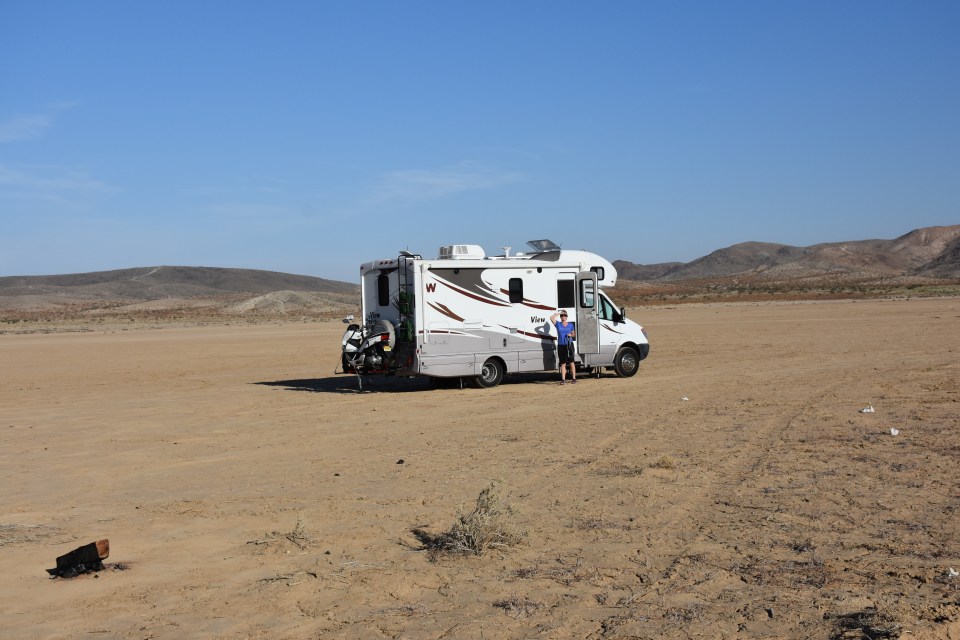


After spending a week or so in Los Angeles and San Diego eating, drinking, and visiting friends and families, it’s nice to get back to visiting the national parks. Combine that consumption aspect with no exercise and we’re feeling that whatever improved shape we had attained through the first 4 months of our trip, has now disappeared. I’m itching to get back in a park and on a trail. We’re heading east (from San Diego) for the first time in over four months. I love San Diego. The weather is beautiful and it’s still got that SoCal laid back vibe, even though it’s quite a bit more built up now than when I was there last. Lots of memories of my brother here as well. But, it’s time to go. So we loaded up the RV with groceries, gas, and clean laundry and hit the highway. As we cruised up through the San Bernadino mountains and gained altitude, the landscape went from dry arid hills inland from the coast to pine trees and other types of greenery that was missing down below. We went from being able to see for miles over tan hills back to seeing only what was just around the bend. We wound our way up the west side of the mountains, crested the top and then started our long descent down the east side and into the California desert. Our destination was Joshua Tree National Park which is located in the Mojave Desert.
It wasn’t a surprise to find that there weren’t any campsites in the park available when we got there as it was a Friday afternoon and most national parks fill up fast. We were however, directed to BLM land about 10 minutes from the park entrance. BLM (Bureau of Land Management) land is free to camp on and after traveling a few miles down a rutted dirt road, rocking back and forth from rut to rut, we arrived at a huge open and flat space in the desert, surrounded by bare desert hills and an open sky that seemed to cover half the earth. There were thirty odd other inhabitants who were taking advantage of the free accommodations and the number increased as the evening wore on. The expanse of desert was probably about 5 or six square miles, surrounded by low hills, so our closest neighbor was about 300 yards away. The wind was starting to pick up and eventually turned into what was no less than hurricane like winds for the rest of the night. Crazy thing about the desert and these types of weather events. It can change in a heartbeat. It can be in the 80’s during the day and down in the 30’s at night. No rain for months and then flash floods that turn baked ground into swamps. It is an environment of extremes. A retired guy who lives in the area stopped by on his 4 x 4 and said the winds would probably die down later. That of course didn’t happen. He chatted with us about the importance of not leaving trash on the land and we whole heartedly agreed. Although the BLM land wasn’t trashed, it was obvious there had been some residents who didn’t subscribe to the “pack it in, pack it out” rule based on some of the papers and boxes blowing across the dry, crusted earth here. The conversation then drifted to dogs, the Vietnam war, coyotes and mountain lions, etc., until his wife called him on the phone and told him to stop talking to every one and get on home. She added that he was in trouble, to which he chuckled that that was the norm. We bid him farewell, he headed west across the desert, and we proceeded to make our dinner. The sunset was mesmerizing and as the sun bid it’s final adieu, the warm temps decided to depart as well. It quickly dipped into the 50’s and eventually the 40’s and the wind didn’t relent. It howled and shook the RV well into the early morning hours. In the dark, it was easy to imagine that we were in a fierce snow storm back east.
The desert is a deceiving place. It hides itself from you and makes you open your eyes and your senses to realize its beauty. At first, it seems barren and unforgiving. It’s hot; there isn’t any water; life is limited and hard to find with the exception of some cacti and scrub bushes. Birds, reptiles, insects, and mammals hide from the extreme daytime temps. Many are nocturnal. It’s a struggle for any living thing to just stay alive. It has a way however of slowly winning you over. You look up and may see for the first time, a sky so wide and clear and cloudless, save for maybe an occasional cloud that got lost and drifts aimlessly until it disappears, that is so big and blue that you may actually start to realize how big this planet that we live on actually is. You turn from horizon to horizon. You breath slowly as the blue sky that is spread out before you has a distinct calming effect. A person can think here. It’s quiet. You can think about anything you want. Your thoughts come easy. And maybe part of it is due to the lack of distractions in the desert. It’s a simple place this desert. Thinking can become a relaxed priority. It’s easy to become introspective. Lots of things make sense. The desert can do that to you. The more relaxed you become, the more you connect with the deserts subtleties. You feel the sun warming you and the cool October breeze cooling you. And then you start to notice the different cacti and scrub bushes that make this environment their home. The rocks and boulders that make up most of the landscape are piled all about you, forming hills, mounds, and piles as if someone had deliberately placed them as such, interspersed with large areas of flatness. There are boulders the size of buildings and others the size of cars and they are a playground for anyone who enjoys climbing. And then you start to notice the colors. The tans and blues and greens. So complimentary these earth colors. And when you look closer, you notice that the distant hills contain pinks, and purples, and blues and greys, and yellows. It’s so much more than tan and brown. And as you hike up desert trails, you notice the sound of your boots as they crunch the sand and rock and dirt beneath it. Each step is that dry crunching sound that is so different than the pine needle covered trails we have spent so much time quietly hiking along in the Rockies and Sierras. I suppose that Mojave isn’t any different than the other environments we’ve been hiking in. Nature requires you to take your time and open your senses to all that is around you. Take your time. Engage it. Smell the air. Feel the breeze. Feel the sun. Gaze at the stars. Look out over the valley’s below. Wonder at the peaks reflected in bodies of water. See the colors and the play of light. Listen to the birds and insects. Touch the tree’s. Touch the ground. Touch the rocks. Get out in it. Open yourself to all that is around you and become a part of it. That is what ties us to nature and being in the desert really isn’t any different. Every ecosystem talks to us in it’s own, mesmerizing way, including the desert, and that is what makes this journey we are on, so remarkable and fulfilling.
JOSHUA TREE ECOLOGY (To Follow)
 Claeys Road Diaries