Claeys Road Diaries
“Of all the paths you take in life, make sure a few of them are dirt" ~John Muir
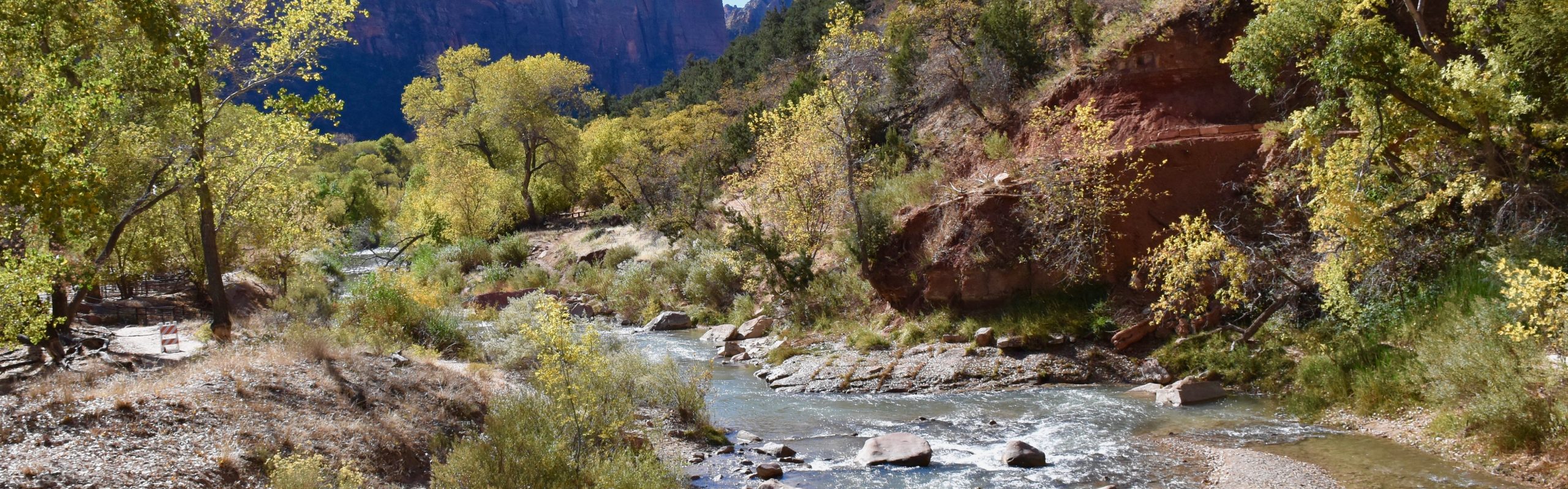
ZION FULLFILLS THE PROMISE #nps #zion


It becomes increasingly difficult to write about the essence of our experience in each National Park right now because one; it takes a lot of time to write them and most days we are out all day hiking, and two; we are hitting a stretch of parks that are very close together, which leaves little time in between parks to write things down. These two points collide and the next thing you know it’s whose on first and what’s on second. What you experienced in a park starts blending in with what your doing in the next park. It started with the Grand Canyon in northern Arizona and is now closely followed by 5 parks in Utah that are very close together. The parks in Utah are like pearls in a string but they are also very unique from each other. Unless we write immediately about the current park, you really start finding yourself falling behind and confusing them. Case in point: I’m writing about Zion today but we have already gone on to Bryce and are now in Capital Reef National Park. OK, so here’s a delayed recounting of Zion.
I want to start with two short stories here. One is that my niece, Meghan, asked me a few months ago about my favorite park and I answered “Glacier”. Our hikes into the alpine zone with all the alpine flowers in bloom was incredible. Story two: a guy in high school is enamored with the first girl he has dated. It starts getting hot and heavy and when I suggest playing the field for some perspective, his answer is that why should he when he has already found one he likes. I ask him if the first ice cream he tasted was vanilla would he ignore Baskin and Robbins for the rest of his life, since all the other flavors he hasn’t tried might “trump” vanilla? Wouldn’t he want to try them all before he entertains some ranking system? His answer is irrelevant but the two stories together are. I should never elevate a park to #1 when there are still about 45 to go. Yes, Glacier was magnificent, but, Zion is incredible. It may be the new number one. Not sure but it’s at least up there. The name Zion means “promised land” and it really does hold true to its name. From the very moment you drive into the park, your head is spinning from one direction to another as the views of the mountains and canyons and cliffs and different geological formations are all different and mixed together and are truly breathtaking. The eleven mile drive into the park has you has you spellbound looking at all of this geological creativity, and that’s before you actually get to the “attractions” further in the park. I can’t describe it all in detail without writing a book so take a look at some of the pictures and then plan a trip here because it is truly breathtaking. Once into the park, there is a valley that runs north to south on the east side of the park. Along each side of this valley are the second round of amazing peaks and cliffs and rock formations, each with their own unique features. The valley is relatively arid with the exception of the Virgin River which runs down its middle and which eventually connects with the Colorado River on its journey to the Pacific. The Virgin River is a flash of green snaking up through the valley and is lined with Box Elder and Cottonwood trees as well as shrubs and grasses. This provides a rich environment for birds, mule deer, squirrels, chipmunks, etc. Many of the cliffs are made of sandstone which is incredibly porous. Zion itself gets very little precipitation, but the rains and snow melt from far away on the elevated Colorado Plateau, seeps down through the sandstone until it reaches a layer of non-porous rock. It then is forced to travel laterally along this non-porous rock through many miles until it reaches the sandstone canyon walls in Zion. Once there it either seeps or pours out of the walls. It takes approximately 12,000 years for the water on the plateau to complete its journey to the canyon walls of Zion! The wet canyon walls and shade then become an environment for a variety of ferns and other plants that grow from the canyon walls forming hanging gardens. This water making its way to the canyon walls was really evident on one of the hikes we took. The hike was called the Narrows, because you hiked up the Virgin River as it makes its way through miles of narrow canyons. The river was our path and the steep canyon walls were decorated with plants taking advantage of the seeping water. This was really a unique hike. The width of the Virgin River up through the canyon varied at different points but all along the route we were boxed in by towering, red canyon walls, the sun and the sky far above. The depth of the river varied from 6 inches up to our upper thighs. At some points the rapids were very strong and it was a challenge to stay upright. The only thing that was maybe more amazing than the canyon and rivers beauty was the fact that I completed the hike without getting knocked over and taking a dip in the 50 degree water! The further up we hiked, the more narrow the passage became and also the deeper the water was. Although the river continues for quite a ways, we turned around and headed back after hiking in about 3 miles. Further up the river the water would have been over our heads in spots and we weren’t necessarily interested in getting soaked. Along the way we could see the end result of the 12,000 year journey of the water in both the hanging gardens and water running down the canyon walls. The water runs into the river which in turn provides the erosive power to continue cutting through the sandstone to deepen the canyon. The Virgin River in turn carries millions of tons of sediment down to the Colorado River every year. Flash floods are a real concern and the river can increase to a wall of water with short notice, even if it is sunny where you are. Storms that are miles away can send flood waters unannounced and its power will carry boulders and trees down as if they are insignificant. The plateau not only gets a significant amount of precipitation vs Zion, it also has much colder temperatures during the winter months. We camped above the canyon rim our first two nights and the nighttime temperatures were in the mid twenties. Later we moved to campsites down in Zion Canyon and the temperatures at night topped out in the mid forties. Big difference. Another hike we did was the “Angels Landing” trail which was only 2.7 miles in (5.4 roundtrip) but the final half mile was what gives the trail its name. It’s a place where only angels go. The trail runs up a very steep incline with thousand foot drops on either side of you. Definitely not the hike for anyone with a fear of heights. That final half mile has chains bolted into the rock for hikers to hold on to as getting a good footing is tentative at best. A number of lives have been lost on this hike although I didn’t think it was too dangerous as long as you got a good grip on the chain. The views of the canyon, valley, and surrounding peaks from the top was crazy. Quite a hike. We did a few other hikes in the canyon and then left the park to drive over to its western side. There we re-entered the park and hiked the Taylor Creek trail up through Kolob Canyon. This was a canyon hike and quite different from the up and downs we did on the east side. The weather varied from minute to minute, either being hot and the air still with you sweating or, the wind was howling, the temperature dropped and you were freezing. This pattern of canyon weather was something that we first encountered in our hike down into the Grand Canyon and we would continue to find it in Zion, Bryce and Capital Reef and I suspect any of the subsequent “canyon” parks we go to. Taylor Creek Trail was a 5 mile hike that took us up along the Creek and into the Kolob Canyons. It was a relatively easy hike but the views were again amazing. The reddish orange cliffs that channeled us up through the canyon seemed to glow like the embers of a fire. It was as if the cliffs had lights in them. There are a number of animals that make the park home although we didn’t see many of them. The beautiful Stellar Jays is a western bluebird that makes a habit of hanging around campsites for handouts. There are elk and Peregrine Falcons that hang out on the rim; Mountain Lions, Desert Tortoises, and Tarantula’s that live in the canyons; and amphibians and humming birds along the Virgin River. There are also a variety of plants that basically are adapted to varying availabilities of water.
It seems futile to search out the superlatives needed to describe the beauty of these parks and the wonder they inspire. I find myself repeating adjectives and not being able to capture in words the beauty these parks contain. And saying which one is the best is like going to an art museum and being mesmerized by incredible paintings of different subjects by different artists, all wonderful and unique, and saying which is the best. As we go from park to park, the wildlife, the flowers, the geological formations, and the weather are all unique. In addition to the visual affect it has on you, you also get to experience the smells and the sounds and even the feel of them. How can you say that one is the best? How can you compare a Rembrandt to a Monet? How can you compare a Glacier to a Zion. You really can’t and maybe you shouldn’t even try. However, Zion National Park by its name, promises the promised land…….. and Zion delivers. It is a MUST SEE. While you’re at it, extend your vacation and hit the other parks in Utah as well. It is a trip through the southwest that you won’t forget.
 Claeys Road Diaries
Love your picture collection and writeup. beautiful post alongwith photos. love your travelling photos. very impressive and intresting blog post. keep sharing and stay in touch
LikeLike