Claeys Road Diaries
“Of all the paths you take in life, make sure a few of them are dirt" ~John Muir
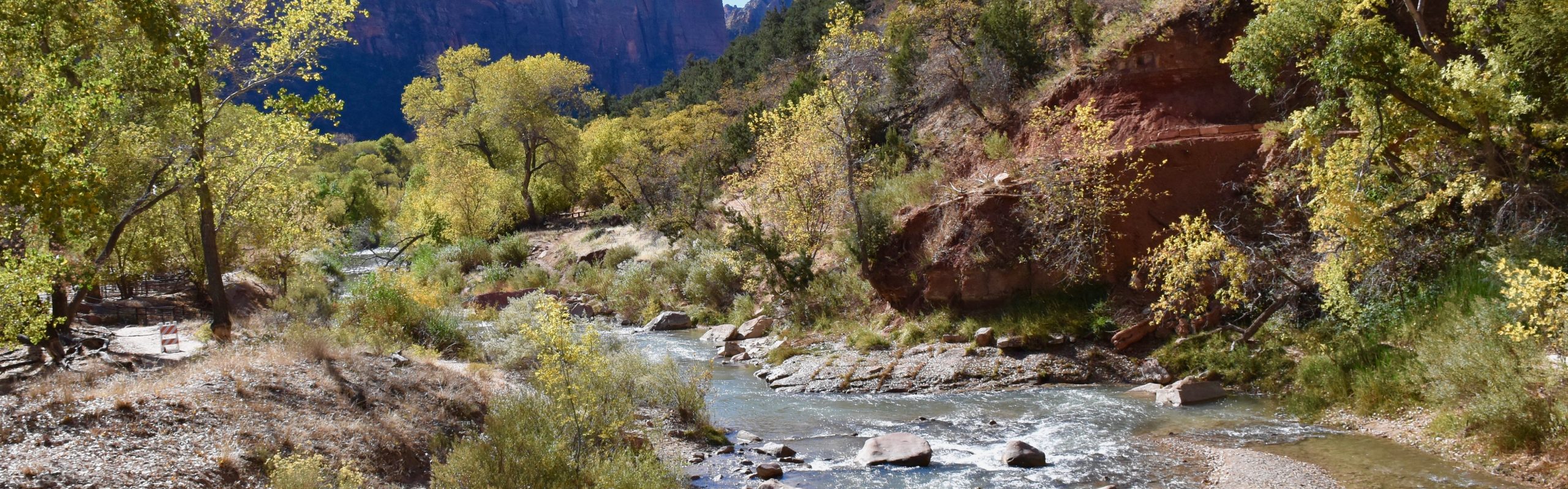
Cape Blanco Lighthouse, Oregon #nps #capeblancolighthouse
081817
Oregon has 9 operating lighthouses on its coast run by the U.S. Coast Guard and all on the National Register of Historic Places. Seven of them are open for public viewing & tours. On the 18th, we visited the Cape Blanco Lighthouse which is the westernmost point of Oregon and of the United States. It is the oldest standing lighthouse on the Oregon coast, commissioned in 1870 to aid shipping generated by gold mining and the lumber industry. Cape Blanco is six miles off the coast and stands 256 feet above sea level. The wind gusts average 30 mile per hour and the temperate is cooler than the rest of the coast line.
I was particularly interested in visiting a lighthouse because my book club read “The Light Between Oceans”, a fictional story about a lightkeeper on Janus Rock in Western Australia (which is a real lighthouse – look it up). Although fiction, the book provided numerous details on the duties of a lightkeeper, the isolation and desperation of being stuck on a ‘rock’ and the way of life. I always liked lighthouses and have taken many photos of them but before reading the book, I didn’t think much about the days when lighthouses were maned or what it was like for those who maned them. This was my first visit to a lighthouse since reading the book and, actually, the first time getting to go into one. And I was excited!
Each lighthouse has its own unique light and captains know where they were based on the light. They used the lights as navigation tools. Some lights welcomed ships while others were meant to warn them. The Cape Blanco Lighthouse was necessary because of the rocky shoreline that surrounds it and its job was to warn sailors to stay away or risk collision and/or sinking. And, believe it or not, despite her warnings, ships still sink!
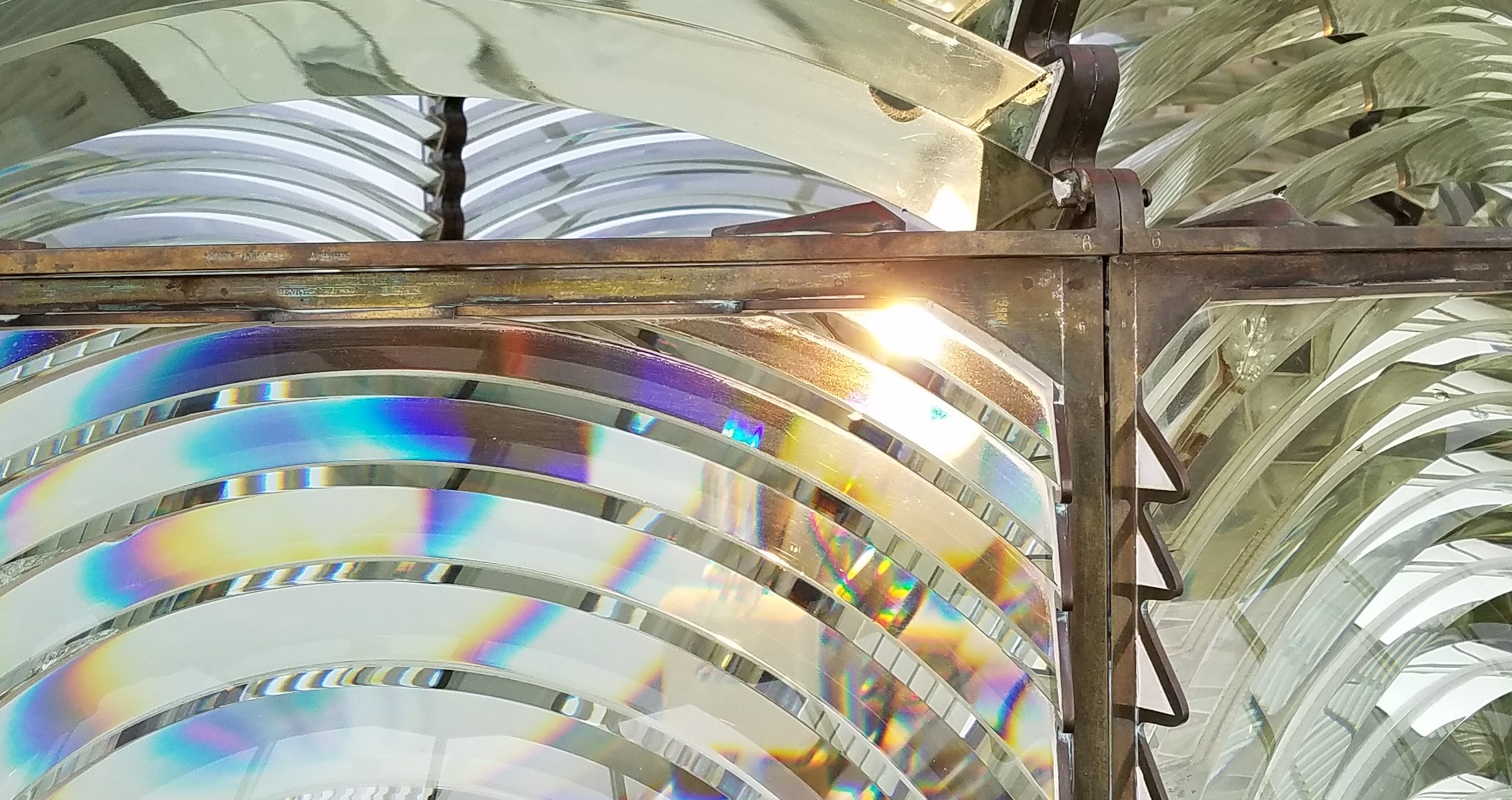
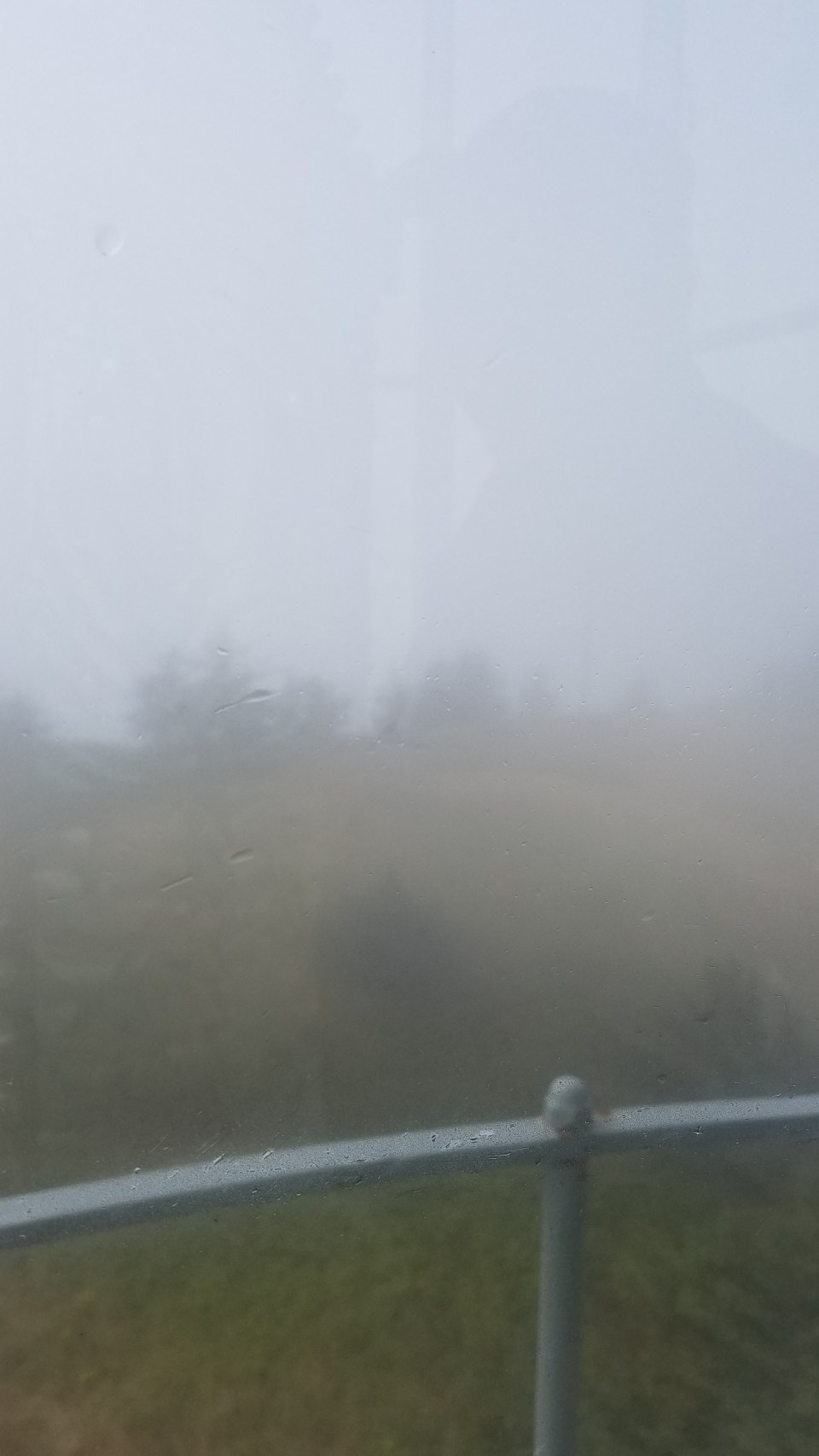
Originally, the light was run by lard oil from 1870-1887 and then mineral oil from 1887-1936, both dirty and smelly so it required a lot of work to keep the light clean. They had to carry containers of fuel up the windy stairs where they spent their nights searching the four windows for signs of ships (we could see nothing today because of the mist) and making sure the lamp stayed lit. We were able to climb the winding ‘floating’ original iron stairs (they are not attached to the structure) up to the fuel room and then to the light tower. We saw the Fresnel lens up close and personal and it was stunning. In the old days, the light was shaped like a cylinder and was refracted using shutters; each lighthouse having its own unique ‘shine’. In 1936, with the arrival of electricity, the wicks were replaced by light bulbs, the shutters replaced by a generator that constantly turns the new cone-shaped light. Also, there is a curtain in the tower because on sunny, clear days, the light is strong enough to start a fire down below.
Cape Blanco had three light keepers: 1 Head Keeper and 2 Assistants. James Langlois served for 34 years, the longest serving lightkeeper at Blanco; arriving in 1876 and leaving in 1919 upon his retirement. He arrived with his wife Elizabeth and son William as Assistant Lightkeeper and was promoted to Head Lightkeeper in 1882. The three lightkeepers and their families all lived under one roof for 34 years until a Head Lightkeeper’s residence was built in 1910. The Head Keeper’s residence was fortunate enough to have a privy but the Assistant’s still had to use the outhouse! Fireplaces and oil lamps were the only source of heat and light and the nearest town was a full day journey away on horse.
When we left for our visit the sun was shining and it was in the 70’s. As we approached the Cape, the sky became foggy and the temperature dropped. We thought at first it might be smoke from the forest fires here in Oregon but we soon realized when the winds hit us that it was the mist from an angry ocean. I was more than a little frightened being on the scooter; we just about got blown over when we got off it. The anemometer registered winds at 35 miles per hour. And this was a typical summer day on the Cape. Which brings me to what the Langlois and others dealt with: howling winds, thick fog and torrential rains – ALL the time. They lived here full time so they grew food, raised livestock and had to manage all their daily chores in these conditions. They were stuck; isolated. No one around; nowhere to go and dealing with the awful weather nearly every day. Sure, ships would come every month or two to deliver mail, paychecks and supplies but other than that, the nearest neighbor lived 3 miles away (this was actually an Assistant Light Keeper, Hughes, who had money and did not like sharing a residence with two other families so he built his own home nearby). Why would anyone sign up for this you ask? Well, in those days, there weren’t too many ‘long-term’, high-paying jobs (they made about $1,800 a year which was supposed to be ‘rich’ in those days). These were federal jobs so there was an allure and a respect that came with the role; they wore uniforms and kept to a rigorous schedule otherwise lives were at stake.
Now, when I see a lighthouse, I think of those men and their families and what they endured to keep watch over men on the sea. It makes me like these beauties all the more.
[Here’s a good laugh for you!]
View from the first floor up to light.

The (new) light. Made of glass. The original reflections where made with shutters and an oil lamp, now we have light bulbs.

View from second floor ‘lookout’ where the men would spend their overnight shifts making sure the flame stayed lit and watching for ships. This was our view the day we visited.
Coming down the ladder to the third floor.

The original winding iron floating staircase.

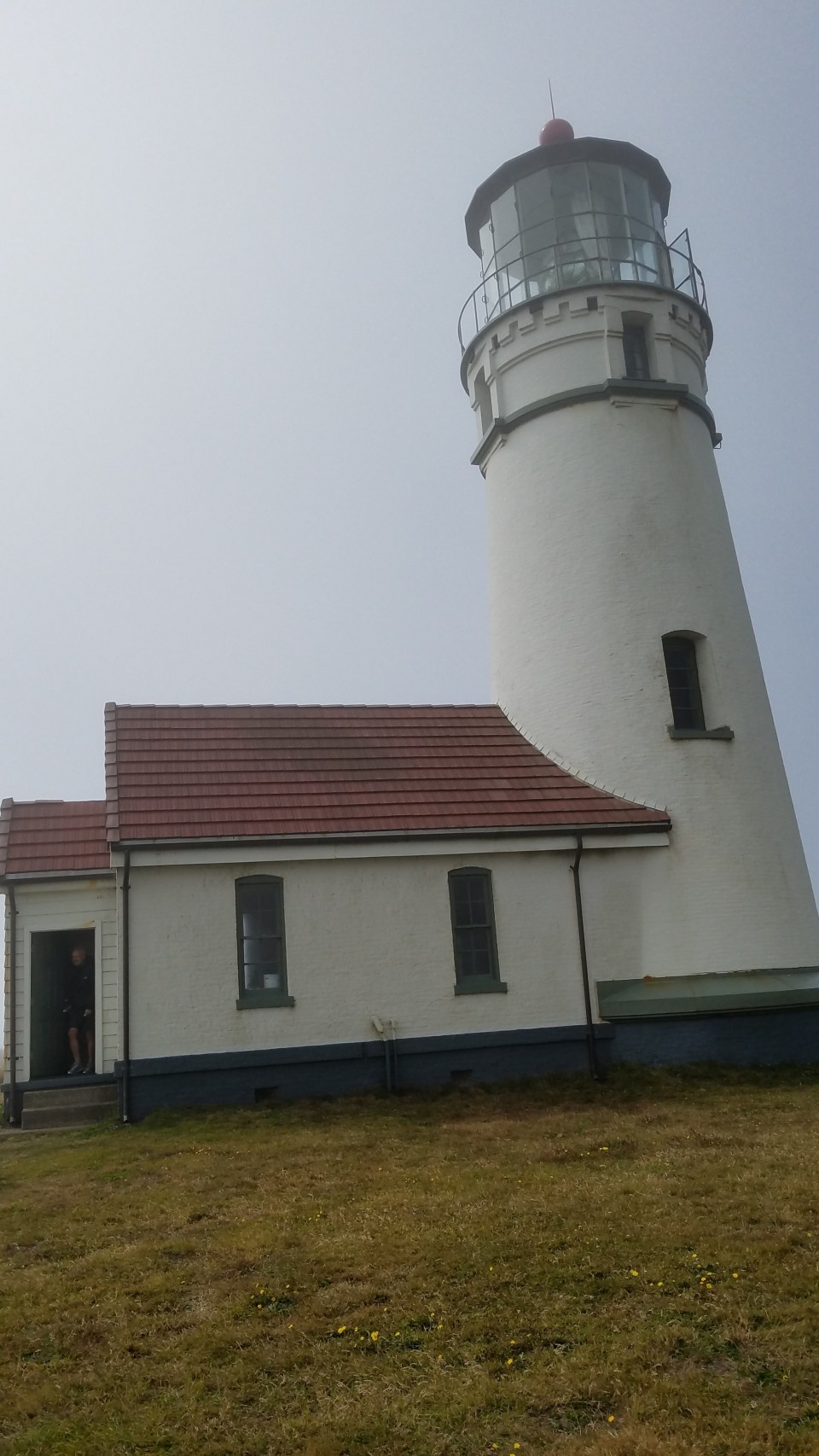
The lighthouse and the fuel room attached. The residence was torn down.
The light again.

 Claeys Road Diaries